



Critics argue these networks effectively act as a real-time tracking system without traditional judicial oversight.
Auron MacIntyre is a conservative political commentator who is a show host and columnist at Blaze Media. He spoke on American Family Radio (AFR)’s “Jenna Ellis in the Morning” program.

“The Supreme Court has said that for the police to track a vehicle with something like GPS, you need a warrant. You have a Fourth Amendment right, and they have to go to the court to get that,” MacIntyre explains.
As he said, they have to prove that an individual is worth tracking in this manner.
“There is no such restriction for flock cameras, even though they're functionally doing the same thing. They're providing a live GPS-style update where every car is on the road,” MacIntyre states.
Police departments, he warned, are racing to install the technology before court rulings can catch up — even bypassing local elected officials to secure funding.
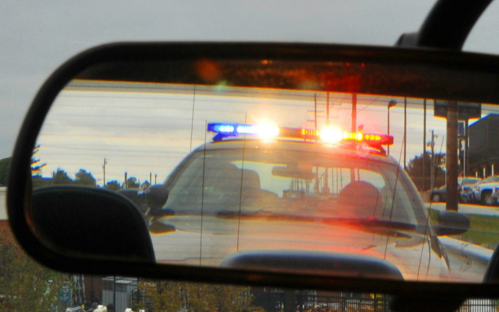
“Law enforcement seems to be like rabidly trying to get these things in place before courts can kind of come down on them,” MacIntyre says. “It's not a question of surveillance. We know who's doing the crime. They're taping themselves doing the crime. The problem is we're too scared to do the follow-through. The problem is not one of technology; the problem is one of will.”
He emphasized that handing algorithms the authority to profile movements introduces unprecedented liability risks — especially when misidentifications or wrongful stops occur without clear accountability.
“When it's the algorithm, there's no one to blame. It's just a ‘glitch in the system.’ We're clearly just outracing the legal framework for this, and I think it's going to be a disaster,” MacIntyre says.

There is also the risk of legal authorities abusing the technology. Fox News reported that Skylar Thompson, a deputy at Jackson County Sheriff’s Department, used the cameras to talk his girlfriend, searching for her license plate over 2,000 times, for nearly a year. After being confront about his illicit use of the cameras, Thomspon resigned and has turned himself in.
John Quaka, former FBI special agent and current police chief of Tupelo, Mississippi, also spoke with AFR on the “At the Core” program. He mentioned how they have used these cameras to help them catch individuals who may have stolen cars or may be responsible for murders, and even helped in a kidnapping case.

He talked about how they monitor the use of technology in the Tupelo Police Department.
“Any system can be misused, and that's just the nature of the game. So, Tuple opd, we do our best to hold everyone accountable. When you log into our system and you're going to request, say, to run a license plate number, you have to give a reason. We limit our access. Only certain individuals have access to the system,” Quaka says.
Not only, he said, do they regulate who has access, they also audit it.
“We created a position within our police department just to manage this. In our real time command center, we created a position known as captain of technology. And that's what he does. That's his only job. So, we keep our finger on it, very close,” Quaka said.