



A three-judge federal panel in Alabama’s Northern District ruled this week that Allen v. Milligan still bars Alabama from replacing its current congressional map before the 2026 midterms, despite the U.S. Supreme Court’s recent decision in Louisiana v. Callais.
The judges said Alabama’s proposed replacement map was intentionally discriminatory against black voters and therefore could not be used.
Allen v. Milligan was a landmark U.S.Supreme Court case decided in 2023 concerning Alabama’s congressional redistricting and the interpretation of Section 2 of the Voting Rights Act of 1965. The ruling reaffirmed protections against racial vote dilution and required Alabama to create a second district where black voters, who make up 27% of the state’s population, could elect their preferred candidate.
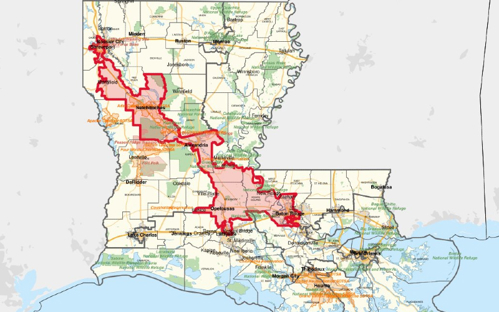 ut earlier this month, the Callais decision changed the rules. That decision significantly narrowed how Section 2 of the Voting Rights Act can be used in redistricting cases. It also opened the door for states to argue that race-conscious district drawing itself may violate the U.S. Constitution.
The judges “doubled down” in obvious bias against the State of Alabama and ignored the Supreme Court, Marshall told “Washington Watch” host Jody Hice on Wednesday.
The Supreme Court’s 6-3 vote “set forth reasonable and appropriate standards to the Callais case from Louisiana. But yet they didn't want to acknowledge that race should not be a basis for drawing maps, that the legislature has the responsibility and the right to be able to draw for partisan reasons the maps for their states,” he said.
He’s confident of a quick reversal of the Alabama judges by the Supreme Court soon, he said.
Under federal law, certain redistricting and Voting Rights Act cases heard by three-judge panels can be appealed directly to the Supreme Court, bypassing the normal appeals court process.
Alabama Republicans are trying to get a fast ruling before candidate filing and special-primary deadlines harden around the court-ordered map.
Marshall says the judges’ ruling, by contending that Alabama is targeting blacks and not a political party, denies the state the right to draw voting districts most likely to represent the majority of its citizens — something six New England states have done for decades.
That distinction by the judges, something Marshall refutes, is significant. Racial minorities are covered by the Voting Rights Act, but political parties are not.
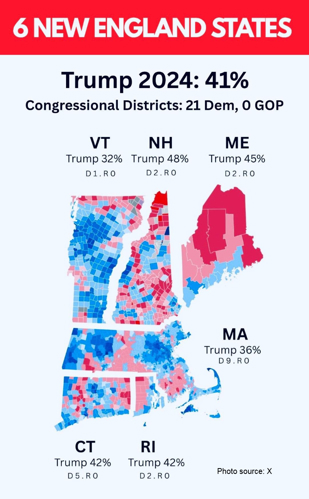 Massachusetts has not elected a Republican to the U.S. House in almost 30 years despite Republicans often winning 30-40% of statewide votes. The region’s current congressional makeup has 33 House and Senate seats with only one Republican — Maine Sen. Susan Collins.
There is no “greater example” of partisan influence in voting maps “than what goes on in New England, yet they want Alabama to be different,” Marshall said.
“We hear this is a majority minority district,” he said. “Let’s call it what it is. It’s a Democratic district they want Alabama to be compelled to draw. We’ve taken this fight back to the Supreme Court, and we’re looking forward to their decision next week.”
If Marshall’s quick reversal prediction comes to pass, it will thwart the District Court judges’ goal as they try to “run out the clock” as the midterms draw closer.
Up against the clock
Alabama Republicans are carefully eyeing the calendar. Gov. Kay Ivey three weeks ago signed a bill that will require her to call special primary elections for the state’s impacted districts — four of their seven total — if the Supreme Court rules in favor of the state.
The special elections would be in August, Marshall said.

The legislature has already responded to an initial District Court order with efforts to ensure it maintains the integrity of voting districts along the Gulf Coast and across central and western Alabama, the latter including a large population of black voters.
“They did that and did it in a way that was completely within their authority. Yet here again, the three-judge panel didn’t feel like it was enough. We think it clearly complies with Callais,” Marshall said.
“There’s no doubt that the path of the plaintiffs and the three-judge panel is to cause significant delay so that Alabama can't win even when we know we're right on the law,” he said.