



In the 6-3 ruling, announced Wednesday, the court struck down a Louisiana congressional map and sided with a federal court that had barred the state legislature from using the controversial map.
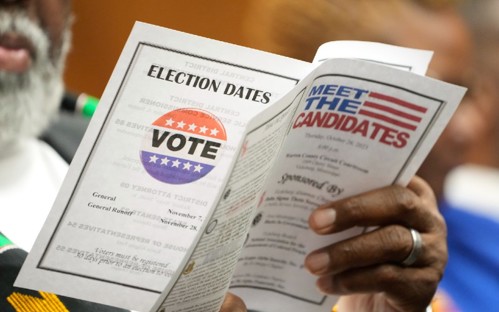 The congressional district in question is the 6th District. It was created by the Louisiana legislature in 2024 to give the state a second majority-black district and comply with Section 2 of the Voting Rights Act.
In order to find and include minority voters, however, the 6th District stretches more than 200 miles across the state in narrow band that many, including Chief Justice John Roberts, describe as a snake-like pattern.
The case heard by SCOTUS, Louisiana v Callais, was brought by white Louisiana voters. They argued compliance with the Voting Rights Act also violates the Constitution’s Equal Protection Clause, since voters are being included – or excluded – in a congressional district based on their race.
Reacting to the Callais ruling, Gov. Jeff Landry and Attorney General Liz Murrill announced Thursday that congressional primaries set for May 16 will not go forward as scheduled, The Associated Press reported.

Describing his state’s legal battle, Louisiana Solicitor General Ben Aguinaga told “Washington Watch” one federal court had ordered the state to draw a second majority-black district to comply with the Voting Rights Act. A second federal court, he said, the one backed up by the SCOTUS ruling, ruled the new congressional district violated the U.S. Constitution.
As for where he stands on the ruling, Aguinaga said the U.S. Constitution was upheld by the high court.
“It's a great day for America,” he said, “because it means that states can no longer be forced to racially discriminate against their own citizens.”
The other view of the ruling, however, is much the opposite: The conservative justices have harmed minorities and set back racial progress, critics argue.
Reacting to the Louisiana ruling, House Minority Leader Hakeem Jeffries (pictured below) told reporters Wednesday “affirmative action is gone, diversity is gone, equity is gone, inclusion is gone, racial tolerance is gone.”
The high court’s ruling, he said, means the Voting Rights Act is “largely gone,” too.
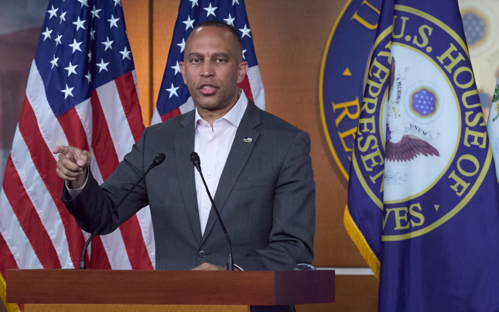 Jeffries, a New York Democrat, represents the 8th District that is known as a “majority minority” district that also benefits from the Voting Rights Act.
In his own state, however, a New York state judge ruled against New York’s version of the federal Voting Rights Act last year in a ruling that mirrors this week's decision.
The judge said a portion of the state law, passed in 2022, violated the U.S. Constitution by allowing minorities to challenge at-large city council elections if they believe those elections diluted minority voting power.
Back on “Washington Watch,” show host Tony Perkins, who lives in Louisiana, said the snake-like 6th District goes from the top of the state down almost to the bottom. It’s an obvious example of gerrymandering, he said, to find minority voters.
“Now, you can't try to dilute the minority vote but, in this case, you had the exact opposite,” Perkins argued.
“That’s right,” Aguinaga agreed.
The solicitor general pointed to Justice Samuel Alito’s majority opinion that said the purpose of allowing a minority district is to remedy intentional racial discrimination.
 In the 36-page opinion, Alito wrote that violating Section 2 of the Voting Rights Act only occurs when “the circumstances give rise to a strong inference that intentional discrimination occurred.”
The State of Louisiana and other states are not engaging in racial discrimination, Aguinaga said, but the Voting Rights Act was being used as if that was happening to create and protect racial gerrymandering.
“In sum,” Alito wrote, “because the Voting Rights Act did not require Louisiana to create an additional majority-minority district, no compelling interest justified the State’s use of race in creating SB8.”
The 2024 map, the one shaped like a snake, Alito wrote, is therefore an “unconstitutional gerrymander” that violates the plaintiffs’ constitutional rights.