



There are only two qualified sources to signal the coming of change on the High Court, Ilya Shapiro, the director of Constitutional Studies at Manhattan Institute, said on “Washington Watch,” Thursday.
President Donald Trump, in a Fox Business Network interview this week, hinted at possible upheaval among the Supremes with as many as three potential vacancies.
“In theory it’s two or three (possible vacancies), they tell me. If you just read statistics, it could be two, could be three, could be one,” Trump said.
Speculation centers mostly on the retirement of conservative Justice Samuel Alito, 76. He recently had a minor health incident that led to dehydration, but he was back on the bench quickly.
 Any such discussion typically includes conservative Justice Clarence Thomas, 77, as well.
If either or both announce retirement this year it would come as Republicans control not only the White House, but the Senate, which confirms — or denies — judicial nominations.
Though justices don’t always vote with their perceived political tilt, the current make-up of the Court is six conservative justices and three liberal justices.
“Unless you hear about a retirement from the justice or maybe his wife, I would discount all of it. It's just rumors based on rumors based on speculation,” Shapiro told show host Jody Hice.
But speculation is an American sport, and the ages of Alito and Thomas lend a touch of inevitability to the discussion.
Thomas was appointed by George H.W. Bush and confirmed in 1991. Alito was appointed by Bush’s son, George W. Bush, and was confirmed in 2006.
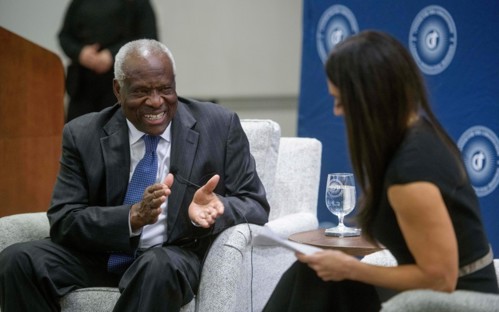 If he serves through May 28, Thomas will become the Court’s longest-serving justice.
“He’s also said they’re going to have to carry him out,” Shapiro said. “So, I doubt he’s going to retire, certainly not this year. That’s why all the focus right now is on Justice Alito.”
While Supreme Court justices typically maintain a low social profile, they understand political realities and current events.
The opportunity for Trump to further impact the Supreme Court is significantly lessened if Republicans lose control of the Senate this November.
The confirmation process
Currently, the GOP, with 53 seats, has what amounts to a six-seat advantage in the Senate. Democrats have 45 seats, but two senators who are technically Independents, Angus King of Maine and Bernie Sanders of Vermont, caucus with Democrats.
A Republican-led Senate can confirm a Supreme Court justice with 51 votes.
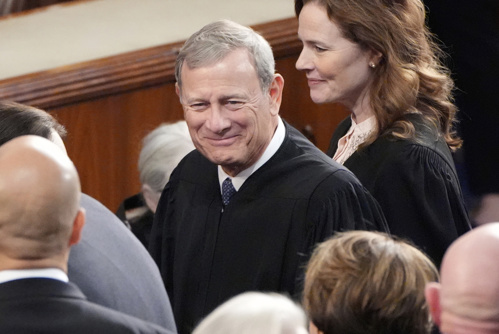 This threshold was established in 2017 when a Republican-led Senate during Trump’s first term couldn’t get the required 60 votes to confirm the president’s choice for the High Court.
Shapiro says Alito “reads the political tea leaves like the rest of us. They’re not immune from understanding these different currents. But at the same time, he’s at the height of his powers and seems to be enjoying his job. I would still not bet on retirement this year.”
Trump, in further comments to Fox’s Mario Bartiromo, praised Alito’s service but also said “it would be nice to say now I have somebody for 40 years.”
Trump said he already has a short list of possible replacements. Such a transition could preserve a conservative Supreme Court majority for decades.
But should political realities shape life decisions or Alito or Thomas?
“I don’t think so,” Mike Donnelly, a long-time constitutional law professor, said on American Family Radio Friday. “They're excellent. If they want to retire, I would say, ‘OK.’ I mean, they should be able to decide what they want to do with their lives, but these are two of the best justices on the court. I would hate to see them go.”
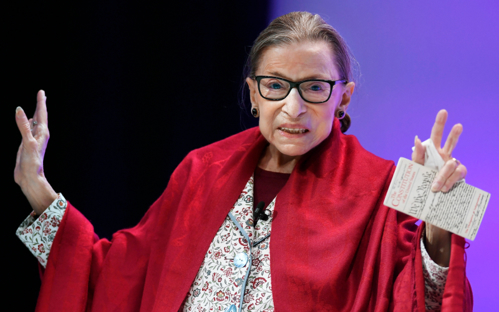 Many Republicans, thankful for the service of Alito and Thomas, look at them and have flashbacks to the passing of Ruth Bader Ginsburg in September of 2020 at the age of 87.
Ginsburg, appointed by Democrat President Bill Clinton in 1993, never actually stated that she wanted to outlast Trump’s first term, but that was the buzz among Democrats at the time.
Her decision to remain on the Court during Trump’s first term led to criticism from some Democrats, especially after her death allowed Trump to appoint Amy Coney Barrett, shifting the Court further right.
Trump’s next move
Only Trump or his inner circle know Trump’s favorites for the next spot should an opening occur.
While Republicans control the Senate, unanimity behind one candidate should not be assumed.
Trump would have to choose carefully, and current judicial experience would be preferred, otherwise “the moderate Republicans would have a lot of ammunition. ‘Well, this person’s never been a judge,’” Donnelly said.
A current senator — Utah’s Mike Lee for example — could get a quicker nod from colleagues than other candidates.
“I don't think anybody can get more quickly through the Senate than Mike Lee, and I think Mike Lee would be phenomenal. He would carry on. I think he clerked for Alito twice. So, you know, you'd be replacing Alito with an Alito clerk and somebody we know very well.”