

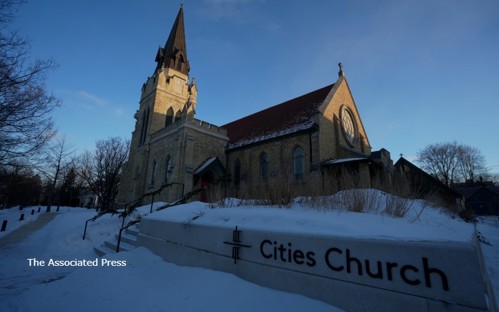
The Justice Department was asking for an indictment for Don Lemon for his alleged role in the Cities Church protest on January 18th. Politico reports that a federal magistrate judge refused to sign the arrest warrants of five people affiliated with the protest, including Lemon and one of his producers, because of claims of lack of evidence to justify it.
 Gerard Filitti, senior counsel at The Lawfare Project, tells the Jenna Ellis in the Morning show on AFR that Magistrate Judge Douglas L. Micko declined the request.
“When it comes to Don Lemon, I think the issue for a judge is they have this fear that, if they rule the wrong way and issue an arrest warrant, they will be on the hook for violating the First Amendment in terms of his purported rights as a so-called reporter,” explains Filitti.
Lemon described himself as a reporter and unaffiliated with the protesters, but he was tipped off about the anti-ICE rally, and his interviews clearly showed his bias in favor of the protesters. Filitti says the Justice Department could have been clearer.

“The judge didn't really see this as an obstruction of religious service. The judge just saw this as a conspiracy against rights. So, I think the problem is, in part, maybe the government didn't do enough to explain the underlying law, but I think the judge also got it completely wrong,” says Filitti.
Filitti does say that the DOJ could get another bite at the apple.
“This is something that still can be done by a grand jury. You can still be indicted. Don Lemon can still be indicted, and the government can still file charges in that way,” states Filitti.
He says that would make an even stronger case.
“The best course of action for the federal government, for the DOJ, is to seek a grand jury indictment, because that is something that is much stronger,” says Filitti.