

Little v. Hecox out of the state of Idaho and West Virginia v. B.P.J. have been combined for justices to clarify whether sports competitions should be segregated by biology. Central is the definition of the word "sex" in Title IX and how it refers to protecting participation in any federally-funded education program or activity – women's sports in this case.
Oral arguments will be heard Tuesday, and a decision is expected before the end of the Court's term in late June.
Twenty-nine states, including Idaho and West Virginia, have passed legislation barring males from competing in female sports in recent years, and Steve McConkey of 4 WINDS USA says conservatives and Christians have been waiting for this for a long time.

"This is good news that it's at the Supreme Court," he tells AFN. "I believe they're gonna follow the Constitution on this, and I think that they will ban transgender athletes from competing. But you never know."
Though her organization is not legally involved in the case, legislative strategist Macy Petty says Concerned Women for America (CWA) is grateful that the Court took up this issue.
"For so long, elected officials and others have not been taking our concerns seriously," Petty laments. "We have been mocked and told that we are alarmists who are making it up."
Meanwhile, research reveals that women have lost more than 1,900 gold medals in the U.S. alone to men competing in their sporting events. And Petty, a former athlete, is no stranger to the issue.
"Back in about 2018, I was at the height of my recruiting process, and the sanctioning organization of the event, USA Volleyball, allowed a man to compete on the women's court, [jeopardizing] our safety and my opportunity to compete in college athletics," she accounts.

Instead of watching her and the other girls show off their skills, college scouts "watched this boy slam the ball in our faces," says Petty. "That's when I first got involved with CWA in its college arm called Young Women for America."
She recognizes the injustice of handing a man a female's scholarship or trophy and of normalizing silence against females who have been beat up by men on the international sports stage while people celebrate that as progress.
"That is not progress," Petty contends. "It is pure chaos, and we cannot continue on this trajectory."
McConkey thinks recent decisions from the International Olympic Committee bode well for females.
"They started doing studies of athletes that went through puberty, and they found that no matter what surgeries or no matter what hormone therapies [males] went through, they were still superior to women athletes," he relays.
The IOC still instructs that eligibility criteria should be based on science and fairness and does not automatically exclude men from women's events under every circumstance, but the committee may announce a ban starting in 2026, pending a formal decision.
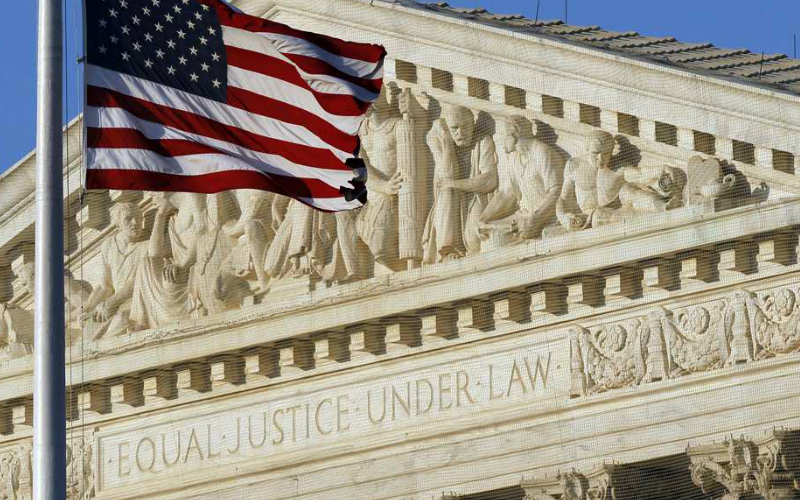
CWA will be participating Tuesday in a rally with Alliance Defending Freedom and Do No Harm outside of the Supreme Court building. Protests are expected as Petty and other female athletes speak, but she is encouraged by prayers and the fact that she is on truth's side.
These cases mark the first time the Supreme Court will directly rule on whether state bans on men and boys in female sports violate federal civil rights law.
Should the court rule in favor of banning men from women's sports, observers wonder whether that will affect a wider range of transgender rights.