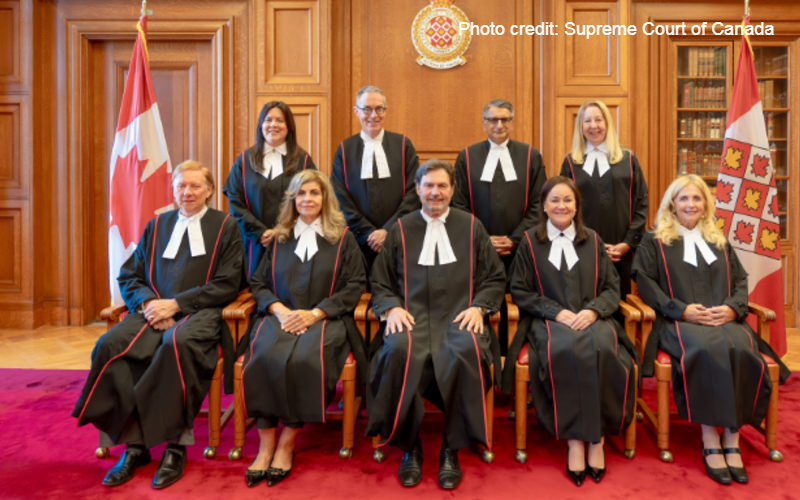



The Obergefell v. Hodges decision led to the legalization of same-sex marriage nationwide. The ruling was 5-4, and Justice Anthony Kennedy, a Reagan appointee, wrote the majority opinion.
Several of the justices that decided Obergefell are no longer on the Supreme Court, and the current group of justices recently held deliberations on whether to take a case from Liberty Counsel that sought to overturn Obergefell.
According to the Associated Press, the justices decided Monday not to take the case, and no reason was given.
Mat Staver, founder and chairman of Liberty Counsel, said it's a tragedy that the High Court did not fix the mess that it created 10 years ago in the Obergefell opinion.
"Three justices have clearly indicated that (the earlier Court decision) made a mistake," Staver tells AFN. "The 5-4 opinion of 2015 was wrong. They were not part of it. They denounced it from the beginning, and subsequently, they should have taken up this case to correct the unconstitutional opinion of Obergefell that has now claimed its first victim with Kim Davis."

Kim Davis is the former Kentucky court clerk who did not want to sign same-sex marriage certificates because of her religious objections. Her actions led to Davis being jailed and successfully sued.
Gerard Filitti, senior counsel for the Lawfare Project, believes the Davis case was not the best to challenge the right to gay marriage.
“I think the issue is that the Supreme Court didn't want to do this on a First Amendment basis but is actually looking for a different kind of case. For example, if a state legislature were to pass a law prohibiting gay marriage, that would be a better vehicle to reach the Supreme Court for an ultimate decision,” he said on American Family Radio Tuesday.
What the Court could have done
The Court could have used its platform to support state’s rights, he said.
“That would be an opportunity for the Supreme Court to weigh in that this is not an issue of jurisdiction for the federal government, that this is a states’ issue, and that Obergefell went too far in establishing essentially a national law. It’s a ruling from the Supreme Court that established this right that's not otherwise within the purview of the federal government to do,” said Filitti.

Essentially, the case was about free speech. The problem, as critics points out, is that Davis was not signing the certificate as an individual on her own behalf but as an agent of the state.
“The court, I think, correctly held that when you work for the government, you are giving up a lot of your First Amendment rights, and you have to do what the government is telling you to do as a government employee,” states Filitti. “But if you have an issue in which a marriage license is denied because of a law, that is something that would be right for the Supreme Court to take up.”
Still, Staver says that it’s heartbreaking what happened to Davis and what this has done for religious liberty. In a statement released by Liberty Counsel, he said they will commit to overturning Obergefell, as it has no constitutional basis, much like the abortion issue in Roe v. Wade.
"This case is a catalyst that will raise up many other individuals like Kim Davis. It's not a matter of if; it's just a matter of when Obergefell will be overturned. We will make that a priority, always have made it a priority for the last 10 years, and we won't give up now. Just like Roe v. Wade, Obergefell will be overturned. Mark my word, its days are numbered," says Staver.
Obergefell will make its way back
Filitti thinks there will be challenges to the transgender movement that will open the door to addressing the Obergefell decision to Supreme Court review.
“When you're trying to redefine what sex and gender are, that is something that judges will look at with more skepticism. That will be the first move against Obergefell, having these challenges to definitions of gender,” explains Filitti. “Then you will have a state that will pass a law that redefines marriage to what it was in the biblical context and moves away from issuing licenses to same-sex couples or transgender couples.”