


The latest filings by Robinson’s legal team asked that their client be allowed to wear plain clothes, not prison-issued apparel, and sit without shackles at trial, The Salt Lake Tribune reported last week.
Prosecutors oppose the request, The Tribune reported.
Robinson is expected to appear in court for a waiver hearing Thursday.
No date has been set for the trial, but the absence of video would be the wrong move, Gerard Filitti, senior counsel for The Lawfare Project, said on American Family Radio Monday.
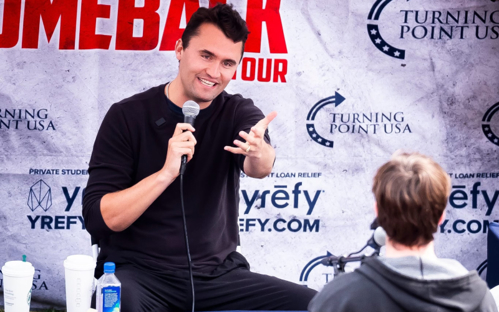 “In a case like this, the public interest mitigates in favor of having these proceedings being videotaped and shown to the public. It's far more damaging when you have people speculating about what went on in the courtroom based on second and third-hand reports than actually having video screening so that people can see for themselves,” Filitti told show host Jenna Ellis.
Limiting courtroom images of Robinson would help turn focus away from his physical appearance, defense attorneys contend.
Robinson did not attend his first court hearing but appeared by video from the Utah County jail. He was wearing a suicide-prevention smock.
His attorneys say public response was “relentlessly focused” on Robinson’s demeanor and appearance. They describe a social media “content tornado” with much of the information exaggerated or outright fake.
Public interest aside, there are concerns about news coverage reaching prospective jurors, but that’s unavoidable, Filitti said.

“There are always concerns that having these proceedings televised will potentially create a problem with a jury pool, but that's a problem that you're not going to get around in a case that's this high-profile, whether or not there's video in the courtroom. So, you really have to take all that into account when you're the judge.”
Graf was appointed to Utah’s Fourth District Court by Gov. Spencer Cox in May, two months before being randomly assigned the Kirk case through the state’s Court Records Information system.
He formally charged Robinson with aggravated murder and other counts on Sept. 16.
Getting to know Graf
Graf has a background as a prosecutor, having worked at the Utah County Attorney’s Office and the Salt Lake County District Attorney’s Office, and holds a Juris Doctor from the University of Utah S.J. Quinney College of Law. Despite being new to the bench he is overseeing one of the most high-profile criminal cases in the country.
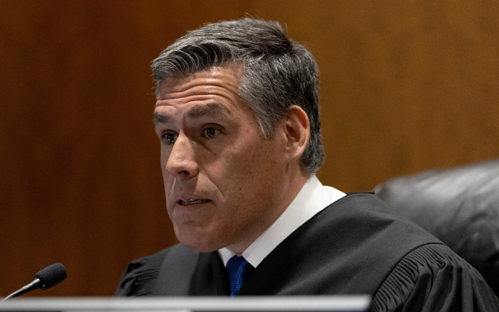 He has pledged to uphold the Constitutional rights of both the accused and the victim.
“What we know is that he has been presiding over cases for many years, and his success rate is that he has not often been overturned for rulings on the bench. So, this is a very thorough jurist who follows by all accounts a very good interpretation of the law,” Filitti said.
The prosecution has formally announced its intent to seek the death penalty. Utah County Attorney Jeff Gray stated he made the decision "based solely on the available evidence and circumstances and nature of the crime." He emphasized that the murder of Charlie Kirk -- targeted for his political expression -- constitutes an "American tragedy" and justified pursuing capital punishment.
The state alleges other aggravating factors, including that Robinson committed the act knowing children were present.
 “Since biblical times, when you intentionally take a life without justification, the punishment has been that you forfeit your right to live, that you forfeit your freedoms, that you have cast such a shadow on God's law that you no longer have that right,” Filitti said.
Death penalty pursuit is the right strategy for the prosecution, he said.
“It’s very appropriate in a lot of cases, and in a case like this, when it looks like the crime was so heinous, so premeditated, so contemplated and had such a wide impact beyond just Charlie Kirk himself, then it's a very appropriate penalty.”
Reading the tea leaves
Robinson’s attorneys asked for more time to review evidence, a fairly common move.
It’s necessary, they told Graf, to allow proper time to examine the “voluminous” amount of evidence provided by the prosecution.
The request for additional time could be a sign that the defense sees no way out for Robinson, Filitti said.
“Sometimes it’s a contemplation of maybe there isn't a challenge to be had to the evidence. Maybe my client actually is not going to be able to say convincingly, I didn't do this. Maybe it is time to enter a plea, and maybe Charlie Kirk's widow will agree to something that is less than a death sentence based on forgiveness or other principles.”