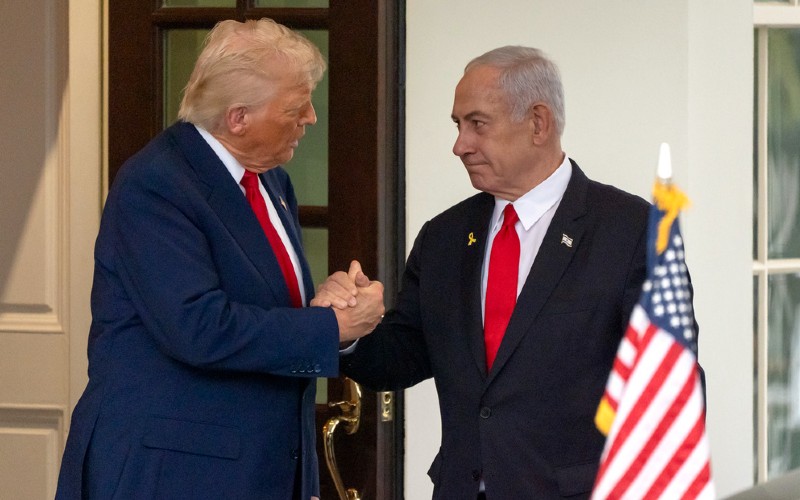



Thursday is Day 2 of the 60-day negotiating window to address the most difficult issues that led to the U.S. war on Iran. President Donald Trump signed the 14-point Memorandum of Understanding (MOU) Wednesday in France.
The momentum led to a further dropping of oil prices which were below $75 a barrel on Thursday morning.
Friday’s scheduled meetings for Geneva, Switzerland will now focus on implementing and clarifying the MOU, Reuters reported.
While many celebrate the end of hostilities, for now, and the reopening of the Strait of Hormuz, the attitude in Israel is wait-and-see, Michael Leiter, Israel’s ambassador to the U.S., said on “Washington Watch” Wednesday.

Israel’s chief concerns center around Iran’s existing stockpile of enriched uranium, its demand for sanctions relief, its demand for the release of $25 billion in currently frozen assets, and its ballistic missile program.
For the Israelis, Iranian nukes are not the be-all end-all of the security discussion. The missiles are a parallel problem.
Those are points that may be addressed within the current window, but Sheldon Kirshner, who writes for The Times of Israel, has his doubts.
“The deal leaves the thorniest issues unresolved for the moment. They are supposed to be addressed in a far more complex round of negotiations, which could drag on indefinitely,” he wrote Tuesday.
Leiter on Wednesday expressed cautious optimism.
“So we're very, very hopeful that the MOU will actually lead to what it claims, and that's the complete cessation of any kind of nuclear proliferation on the part of Iran,” he told show host Tony Perkins.
Trump has claimed from the beginning that his primary objective for the war has been to prevent Iran from obtaining a nuclear weapon.
But about those missiles...
“We’re also hopeful that in these 60 days, the issue of ballistic missiles is going to be discussed and hopefully terminated, because Tehran is not like any other state. They're a murderous bunch of thugs, and if they have ballistic missiles, they're going to use them on their neighbors,” Leiter said.
In the early days of fighting the White House claimed that 85% of Iran’s defense industrial base had been destroyed.
It cited missiles and launchers within that estimate which also included long-range attack drones.
But the ceasefire that enabled negotiations for the MOU provided Iran with critical time to dig out buried assets, repair tunnel entrances and reestablish command chains.
 More recent intelligence reports indicate Iran could retain roughly half of its pre-war missile launcher capacity.
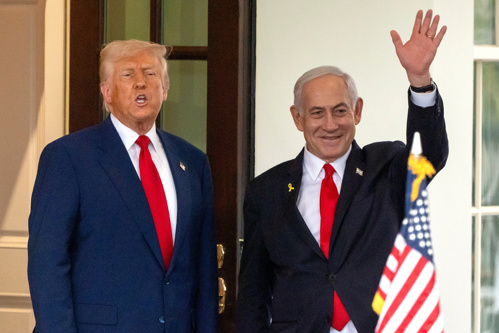
Israeli Prime Minister Benjamin Netanyahu told CBS in May that China has been giving Iran “components of missile manufacturing.” He offered no more specifics.
Trump comments on Wednesday during a G7 press conference stoked Israeli concerns for Iranian missiles as the president implied the Iranian regime would responsibly handle such powerful weaponry.
“If other countries have them, it’s a little bit unfair for them not to have some,” Trump said. “If Saudi Arabia and Qatar, and they all have some, I would say that in relative proportion, I think it’s OK” for Iran to have ballistic missiles also.
Trump continued: “Missiles aren’t the problem. They hurt a little location, but they don’t blow up the planet (like nuclear weapons do).”
The Hezbollah question
In addition to Iran’s missile program, the Israel-Hezbollah relationship has been a main sticking point of negotiations as Iran insists that its terror proxy is cared for while Israel has continued operations against the outfit that consistently attacks its northern territory.
Even as the U.S. and Iran moved toward an agreement, Israel and Hezbollah continued exchanging attacks, creating concerns that diplomacy efforts could collapse.
Trump publicly criticized some Israeli strikes, saying they endangered the negotiations.
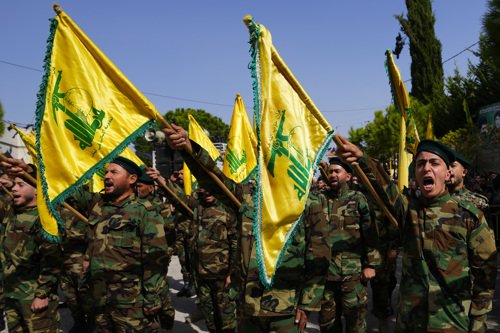 He’s even suggested that Israel pull out of Lebanon and let Syrian elements continue the fight against Hezbollah.
“Israel's fighting Hezbollah too long, and too many people are being killed. And you don't have to knock down an apartment house every time you're looking for somebody,” the president said during a G7 news conference this week.
“And I suggested to Israel to let Syria take care of Hezbollah. Because to be honest with you, I think they’d do a better job of doing it,” Trump said.
Leiter says he’s “hopeful” that Iran will not be allowed to dictate a future for Lebanon that could endanger Israelis and Lebanese alike.
“We can't have Hezbollah on our border, and we can't have Hezbollah continue to maintain tens of thousands of their terrorist fighters that try to infiltrate northern Israel and fire shoulder-to-shoulder missiles and killer drones into our communities,” he said.