

Dr. Michael Rubin, a senior fellow at the American Enterprise Institute, told the “Washington Watch” program Thursday he is concerned that scenario could happen in coming days because of politics, both domestic and international.
“I am concerned because we've seen the show before with regard to Operation Rough Rider," Rubin told show host Tony Perkins.
Rough Rider, a 50-day air and naval campaign ordered by President Trump, beat back the Houthi rebels in Yemen who were attacking maritime traffic in the Red Sea. It was launched almost a year ago, starting March 15, and concluded with a ceasefire brokered by Oman.
Rubin, who has traveled extensively all over the Middle East, including in Yemen and Iran, told Perkins he heard complaints in Yemen from anti-Houthi military forces there.
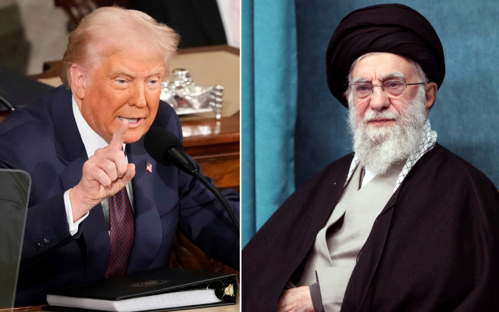 “What they were saying is they had no forewarning before Trump's Truth Social post that he was going to pull the plug and declare victory,” Rubin said, referring to a social media post from the U.S. president.
The post stated the Houthis had surrendered and “don’t want to fight anymore,” but military analysts criticized the sudden end of the U.S. attack and the Houthis mocked the U.S. with the hashtag “#YemenDefeatsAmerica.”
Even though many Americans may have forgotten about Rough Rider, if they even knew about it, Rubin said many people in the Middle East remember it a year later and are worried about a repeat in Operation Epic Fury.
It is also up in air how U.S. casualties have changed - or will change - public opinion. All six crew members of a KC-135 refueler died in a mid-air accident of Iraq, U.S. Central Command confirmed Friday. Those fatalities doubled the number of U.S. service members killed so far in Epic Fury.
Politics at the gas pump
A former Pentagon official, Rubin has taught Middle East history, including its culture and politics, to classes of U.S. Navy sailors and U.S. Marines. The Middle East scholar knows about U.S. politics, too, including midterm elections now eight months away that could end the Republican Party’s razor-thin majority in Congress.
At Real Clear Politics, the generic congressional vote currently shows a 4.7% advantage for the Democratic Party, AFN previously reported.
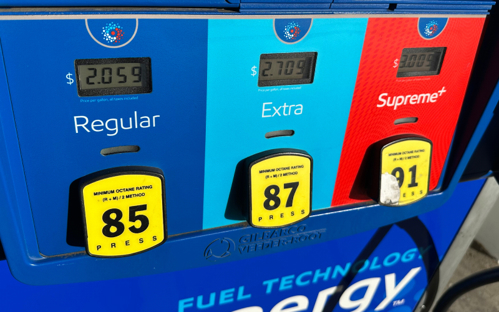 On the program, show host Tony Perkins pointed to the political elephant in the room: a “wobbly” stock market, gas prices climbing, and worried Republicans.
After two weeks of war in Iran, the U.S. price for a gallon of gas has jumped about 20% over that time. That means a truck or minivan that cost $40 to fill up two weeks ago is costing almost $50, on average, by the next pay day.
The national average this week is $3.60 per gallon, when it was $2.94 one month ago, according to figures from AAA. That change is a 23% jump per gallon.
Agreeing the U.S. must quickly maintain control of the Strait of Hormuz, Rubin said doing so will drop the price of gasoline quickly and will prove many people wrong when the price drops.
Regime change may not be the plan
Attempting to look beyond politics and elections, Rubin agreed with Perkins that Operation Epic Fury is like a "short-term pain" with a long-term benefit. It has the potential, he said, to create long-term stability in the Middle East after decades of Iran creating instability in the region.
“If a campfire starts to burn out of control,” Rubin said, “you want to put it out right away. You don't want to wait until it consumes the entire forest. But that is what we've done over the last several decades.”
On the topic of “regime change” in Iran, meaning the overthrow of the despotic and murderous ayatollahs, Rubin said that political future could be left up to the Iranians themselves in coming weeks.
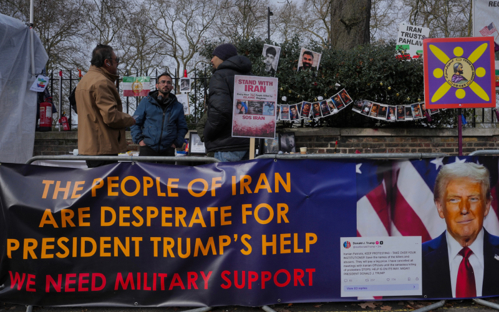 “Donald Trump, for better or for worse,” Rubin predicted, “is likely to say that he has achieved his aims of ending Iran's nuclear program and also setting back its ballistic missile program. He may not change the regime.”
If the Iranian people do overthrow their government in coming weeks, Rubin said, they are being helped by Israel. IDF strikes are taking out Iran's paramilitary forces right now, he said, that have set up roadblocks and are controlling the public streets.
When Perkins asked Rubin what his personal message would be to President Trump, the Middle East scholar said the commander in chief must finish what he started.
“The message to the president,” Rubin replied, “is a little investment now is going to save lives later.”