

The U.S. president has raised $17 billion in total pledges for his Gaza Board of Peace which aims to reconstruct and revitalize the war-torn home of Hamas. Much of Gaza was reduced to rubble by the Israelis after Hamas’ rampage of murder and kidnapping in Israel on Oct. 7, 2023.
The group held its first meeting last Thursday with reconstruction and stabilization its primary agenda.
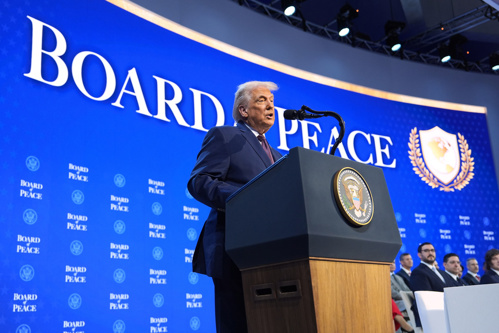 The first meeting produced significant symbolic momentum along with the financial pledges for Gaza’s post-war phase, but many core implementation questions remain unresolved, especially regarding security conditions, disarmament, funding authorization, and international legitimacy relative to the United Nations.
For all the buildings destroyed and Hamas leaders killed by Israel – at least nine spanning top positions – Hamas remains in Gaza and refuses to give up its guns.
Since the ceasefire, Israel is believed to control up to 50% of Gaza though not the most populated areas.
Meanwhile, Hamas has been re-establishing its structure across much of Gaza with 14 of 17 of its government services now functioning again compared to just five at the height of the war. Public services such as identity cards, civil documentation, and some social services are now being provided under Hamas’ local administration.
Residents often have to go to Hamas authorities for essential paperwork and processes.
Pledged money isn’t cash-on-hand
Even a Board of Peace worth billions won’t find it easy to uproot Hamas, and if that doesn’t happen, the pledged money may never materialize.
“I don't think the Board of Peace is going to be able to answer the fundamental question, which is how do you disarm Hamas? None of these investments are going to be made in the rebuilding of Gaza or sending foreign troops if Hamas is not disarmed,” Elliott Abrams, a U.S. special representative to Iran during Trump’s first term, told show host Tony Perkins.

Israel’s fight with Hamas may not be done, Abrams said.
Indonesia, Morocco, Kazakhstan, Kosovo and Albania have committed to troops to support the rebuilding and stabilization of Gaza under the International Stabilization Force.
The plan calls for a total deployment of 20,000 international soldiers and 12,000 police officers. The force will be commanded by U.S. Army Major General Jasper Jeffers and will coordinate its activities with civilian reconstruction authorities, Defense News reports.
Initial deployment will begin in Rafah, identified as the primary location for early infrastructure rehabilitation efforts. Rafah has been designated as the starting point for phased stabilization and reconstruction activities.
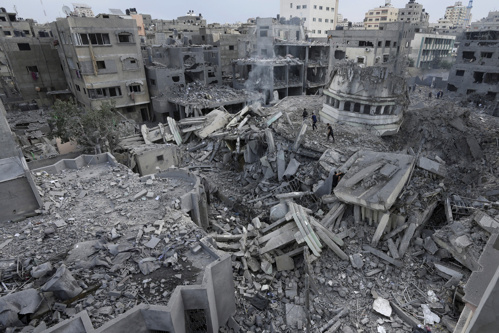 Rafah is located in the southern-most part of the Gaza Strip, directly along the border with Egypt. Israel maintains control of the area.
Under the agreed structure, the ISF’s responsibilities will include securing border areas, protecting reconstruction sites, and ensuring safe conditions for humanitarian operations.
The mandate does not authorize offensive combat operations and is focused on maintaining order during rebuilding phases.
Right now, the Board of Peace lacks the bite to enforce its will.
“These foreign troops from Indonesia and other places, they're not willing to fight. They're kind of the standard U.N.-type force, which is willing to keep parties apart if they want to be apart. Only the Israelis are really willing to fight Hamas. So, I don't think the Board of Peace is really able yet to do what it needs to do,” Abrams said.
Will Israelis come out of bullpen to disarm Hamas?
Unless Hamas changes course and willingly lays down its arms, the best work by Board of Peace troops will be done in Israeli-controlled areas of Gaza.
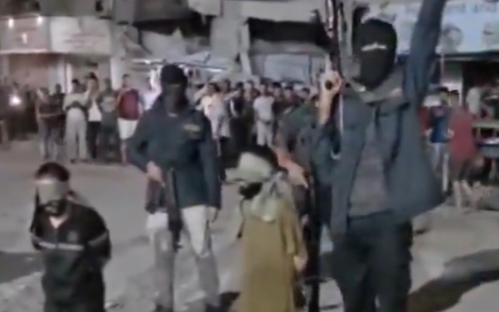 In Hamas-controlled Gaza, local security is often enforced by Hamas-aligned police, which has helped reduce some criminal elements and disorder, but also involves strict control, and sometimes violent enforcement.
Economic activity — markets, shops, and services — is slowly returning, but remains heavily taxed and regulated, TimesLIVE reports.
“I don't think the Board of Peace is going to be able to get beyond that most difficult question, which is if Hamas won't voluntarily disarm, who's going to do it? I think in the end you get to the Israelis,” Abrams said.