


That’s the message Israel Prime Minister Benjamin Netanyahu is also expected to bring for a rushed meeting with President Donald Trump, set for Wednesday, in Washington, D.C.
Netanyahu was originally scheduled to be in Washington later this month but has asked to move up the meeting, a sign most observers feel illustrates Israel’s anxiety over ongoing talks between the U.S. and Iran.
An Israeli official told The Times of Israel that Netanyahu was making the trip with the “aim of influencing the negotiations with Iran.”
U.S. military build-up in the region began as street protests against the Islamic government were numbering into the hundreds of thousands, surpassing even a million people, according to some reports.
Reprisal was fierce with the regime killing well over 30,000, including executing prisoners and killing wounded protesters many who were shot in hospital beds and hallways.
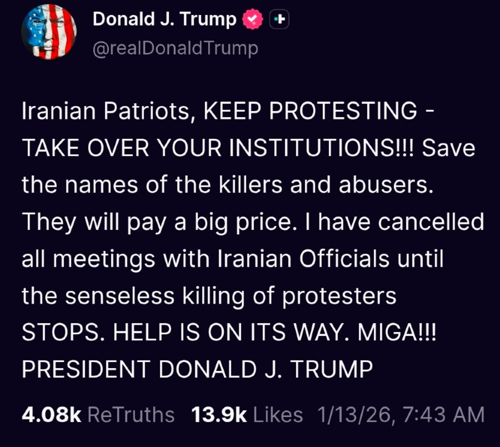 This was the scene as Trump on Jan. 13 urged “Iranian Patriots, keep protesting, take over your institutions … Help is on its way.”
The implied message is help directed by the Pentagon, not diplomatic help, like the U.S.-Iran negotiations that happened in Oman.
The concern throughout the region, in Israel and in some Arab states, too, Rubin stressed, is if Trump is going to take action against Iran, he needs to complete the job.
"When you have a hornet's nest, you either leave it alone or you get rid of it. But the United States has developed a reputation for standing underneath it, lightly tapping it with a stick, and then walking away,” Rubin said.
The outlier in that reputation is Operation Midnight Hammer last June in which the U.S. targeted Iranian nuclear sites at Fordow, Natanz and Isfahan.
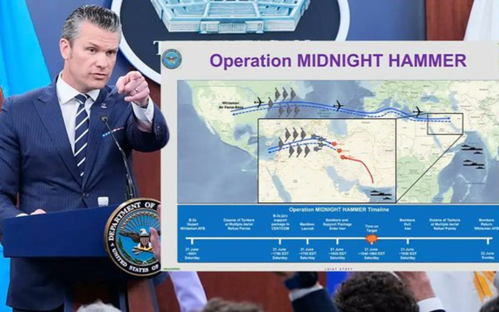 Trump authorized the strikes from seven B-2 Spirit stealth bombers which included the first operational use of the 30,000-pound bunker busters, the Massive Ordnance Penetrator (MOP). Fourteen were used at Fordow and Natanz.
Netanyhau may suggest a similar approach this week.
Ballistic missiles also a concern
Before boarding Wing of Zion for his flight, Netanyahu told reporters that he will “present to the president our approach around our principles on the negotiations,” The Times of Israel reported.
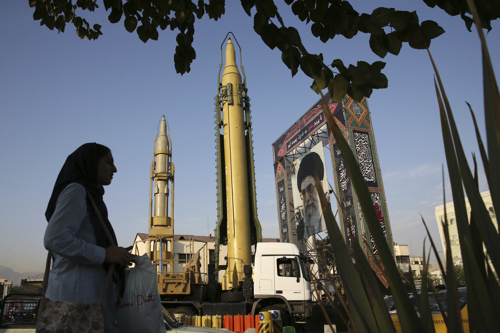
Netanyahu’s concerns are not limited to Iran’s nuclear ambitions. The prime minister will also emphasize his desire for limitations to Iran’s development of ballistic missiles, Jewish Insider reports.
The two leaders are expected to also discuss the rebuilding of Gaza and the disarming of Hamas.
 It’s possible Netanyahu intends to share some intelligence gained by the Israelis.
“That wouldn’t surprise me at all,” Rubin said. “Much of our intelligence actually comes from Israel. When people question the U.S.-Israeli relationship, too often they don't recognize that we actually get more from Israel than Israel gets from us.”
Rubin cited the intelligence-gathering success of Israel in operations against Iran in 1981, against Syria in 2007 and other times through the years.
“Israel’s intelligence in the region is pretty darn good. When push comes to shove they’re only eight miles wide. They don’t have any margin for error,” he said.
For now, the Iranians are engaging in the regime’s regular strategy with the U.S. which is to stall for time. It plays well with a Trump administration that seems always up for a good diplomatic chat.
“We saw this, for example, in his first term with North Korea,” Rubin pointed out.
Where the Iranians haven’t figured out Trump – or have ignored their findings – is that “he’s much more willing to walk away” from talks than previous U.S. presidents, Rubin said.
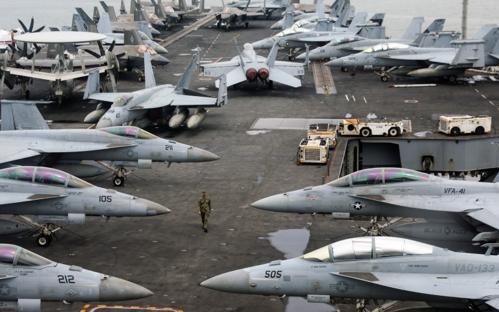 The total U.S. military footprint in the region now is estimated at 50,000 personnel.
The force is led by the USS Abraham Lincoln which is carrying F-35C Lightning II stealth fighters, F/A-18E/F Super Hornets, electronic warfare aircraft, the E-2D Advanced Hawkeye for early warning and the CMV-22B Osprey for logistics.
The Lincoln is escorted by three Arleigh Burke-class destroyers.
Differences within the concerns
Israel and the U.S. are both concerned with Iran’s nuclear capabilities, but there are variations within those concerns.
“The United States looks at Iran’s nuclear program as strategically untenable, because Iran with nuclear weapons would change the region completely,” Rubin said.
What concerns the Israelis more is control of those nukes, especially in these tentative times.

“The Israelis worry about Iran collapsing with nuclear weapons,” Rubin said.
If the ayatollahs flee, the Iranian arsenal – nuclear and otherwise -- could fall into the hands of the Iranian Revolutionary Guard (IRGC), which is ideologically committed to the destruction of Israel, viewing it as an illegitimate government propped up by the West.
“It’s not suicide that Israel is worried about. What the Israelis worry about is Iran with a terminal illness that is going to lash out in its last moments when deterrence is off the table,” Rubin said.