



Abdul El-Sayed is fast establishing himself as the new rising star in the radical Democrat Party. The incoming Michigan senator has already made it clear that he will push an anti-Israel agenda when he arrives in Washington.
Now elected as the first Muslim senator, El-Sayed also has multiple allegations tying him to the Muslim Brotherhood.
The new Senator-elect is also being cited as an example of the "Red-Green Alliance," a reference to a partnership between communists and Islamists who share the goal of toppling the West.

Robert Spencer, director of Jihad Watch, thinks that, unfortunately, he's going to pull all of the Democrats in the Senate in his direction.
"Just like Ilhan Omar and Rashida Tlaib, in the House, have made the House Democrats much farther to the left than they would have been, Abdul El-Sayed is going to do the same thing in the Senate," Spencer says.
This rise of radicals reminds Spencer of the Bolsheviks during the Russian communist revolution in 1917.
At the time, the Romanov dynasty was the royal family of Russia, with Czar Nicholas II ruling.
During that time period, the Bolsheviks and the Mensheviks were two factions from Russia's Social Democratic Labour Party. Both factions wanted to overthrow the ruling dynasty, but a key disagreement among the two groups was disagreement over how that change should take place. The more peaceful Mensheviks wanted a gradual change but the Bolsheviks demanded a revolution and defended violence and murder to make it happen.
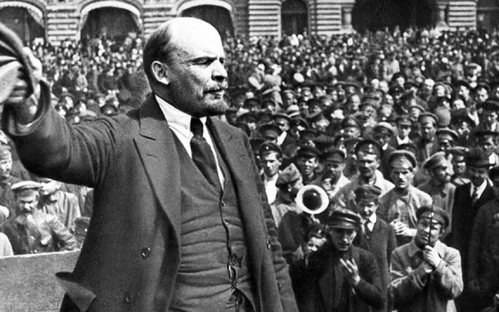 Harsh economic conditions and involvement in World War I resulted in protests, which became the February Revolution and took the rulers out of power. A temporary government under Alexander Kerensky was established. However, along with granting some rights, he continued Russia's participation in the war, which was a deeply unpopular decision among the people.
A second revolution staged by the Bolsheviks and their allies, and spearheaded by Vladimir Lenin, overthrew the provisional government and established the world's first communist state.
What happened to the Mensheviks? By 1922, the Menshevik party was permanently banned after its members had been rounded up, put on trial, and either executed or sent to a gulag.
Some critics of the Democratic Socialists of America have made that Bolshevik-versus-Menshevik comparison to the Democratic Socialists of American and liberals within the Democratic Party.
During the recent congressional elections, DSA-endorsed candidates stunned Democrats on Capitol Hill after defeating incumbent Democrats in several congressional races.
 "The Bolsheviks were never a majority. They never had the support of the people, but they were the most organized, vocal, and ruthless group in Russia, so they were able to seize power and hold it for 70 years," Spencer said.
The overthrow of czar and the temporary government, along with the establishment Lenin as the leader, led to the Soviet Union, which wasn't abolished until 1991.
"It's the same kind of thing here. Abdul El-Sayed is the organized, energized vanguard in the new incoming Senate. He's going to change the whole tone and nature of the Senate in the direction that is anti-American, pro-jihad, certainly anti-Israel and, of course, pro-socialist," Spencer warns.