


According to the Buckley Institute’s latest national study, four in 10 undergraduates believe expressing offensive opinions should lead to criminal prosecution.
The findings also point to an alarming acceptance of political violence (45%), which students claim is justified in stopping hate speech. Regarding this opinion, liberal students lead by 54%, with only 30% of conservatives agreeing.
Commentary on Fox News’ “Outnumbered” program highlighted that nearly half of college students justify physical force against hate speech.
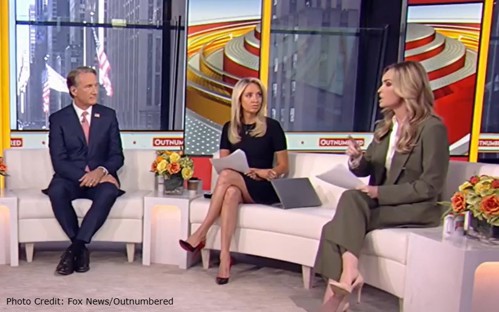
“Forty-five percent of undergraduates believe physical violence can be justified to prevent hate speech or racially charged comments, and 42% say political comments they disagree with can harm their mental health,” said Kayleigh McEnany, co-host of “Outnumbered.”
Only 66% of undergraduates agree that the First Amendment protects hate speech. And surprisingly, 77% of those who support physical violence also believe that hate speech is protected by the Constitution.
Meanwhile, 26% of college students said that Charlie Kirk’s speech was harmful and that it was not surprising that there were consequences.
Panelists blamed higher education and the breakdown of traditional institutions for cultivating an environment of grievance politics and extreme ideological tolerance for violence.
“So instead of faith, what we have now is social justice. Instead of family, we have activism. And instead of freedom, we have an increasingly intolerant ideology that teaches young adults that violence actually might be an acceptable means to radical change,” said Kaylee McGhee White, a political commentator and Fox News contributor.
Political leaders emphasized that resorting to physical force directly undermines core democratic principles and civil debate.
“You can’t take violence into your own hands... this is just absolutely, fundamentally wrong, to take violence into your own hands to try to reconcile a disagreement,” said former Virginia Gov. Glenn Youngkin.
Analysts stress that protecting First Amendment rights requires higher education to foster open dialogue — rather than enforcing silence through intimidation.