
So it is with the Trump administration’s case against the Southern Poverty Law Center (SPLC), Tyler O’Neil, senior editor of The Daily Signal, said on “Washington Watch” Thursday.
A federal grand jury last week returned an indictment with 11 counts of alleged financial fraud that accused the SPLC of contributing to the very organizations it assured donors it was fighting.
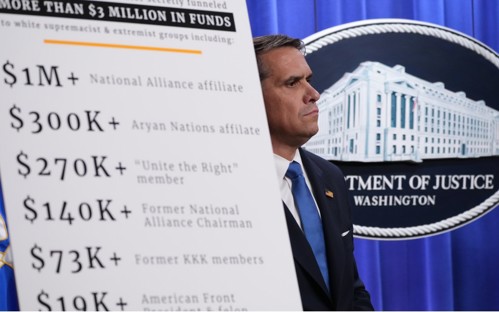
This wasn’t just about paying informants. The government alleges the SPLC paid healthy sums, $3 million in all, to leaders within extremist groups such as the Ku Klux Klan and organizers of the 2017 Unite the Right rally in Charlottesville, Virginia.
 In two court filings submitted earlier this week, the SPLC strongly refuted the charges and accused government officials of making "materially false statements." The organization argued that its informant program was conducted in cooperation with the FBI for decades and had helped prevent violence, citing a 45-page "event alert" shared with the FBI before the Charlottesville rally.
“The information that the SPLC shared with the FBI over the last 40 years saved lives,” said Bryan Fair, interim president and CEO, SPLC. “When we began working with informants, we were living in the shadow of the height of the Civil Rights Movement, which had seen bombings at churches, state-sponsored violence against demonstrators and the murders of activists that went unanswered by the justice system.
“When threats and other unlawful activity were revealed, the SPLC immediately passed that information to law enforcement officials, local, state and federal and assisted in efforts to prevent violence and stop criminal activity.”
While the SPLC says the government’s case is weak, the DOJ says “wait and see.”
“This is an ongoing investigation against all individuals involved,” FBI Director Kash Patel said.
O’Neil, who has authored a book on the SPLC, said he is eager to see the Devil in the details.
“I think there's a great deal more that I'm excited to see, hopefully, as the process continues. What we see from this indictment is a lot of damning information, but it's the overall story of the information. It's not the information itself,” he told show host Tony Perkins.
The Unite the Right rally brought together a wide range of far-right groups, including neo-Nazis, Ku Klux Klan members, and militia groups.
During the event, a car rammed into a group of counter-protesters resulting in one death and 19 injuries.
 The event eventually became a rallying cry for Democrats against Trump in his 2020 reelection campaign.
Now the government alleges the SPLC paid almost $300,000 to at least one event organizer and $3 million to people inside these other extremist groups.
The case may turn on whether those who received SPLC money are characterized as “informants” in the traditional understanding of the word or leaders high up the organizational structure — or both.
“I'd really like to delve into exactly how the SPLC was allegedly supervising the posts of the guy who helped organize the Charlottesville Unite the Right rally. That’s interesting information there because it really undermines the SPLC's claim that these people were just informants tipping off the SPLC to potential violent threats,” O’Neil said.
How SPLC may be using its hate cash
The indictment alleges that the SPLC in essence was propping up groups it would then attack as part of its fund-raising efforts.
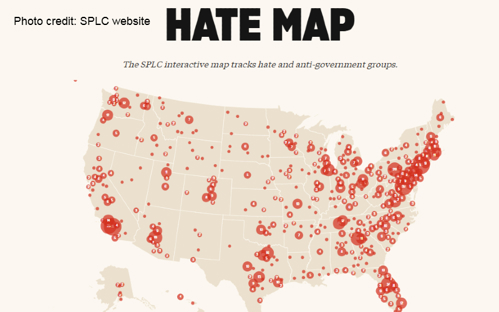
Failure to embrace any part of the LGBTQ agenda can put a group on the SPLC’s national “hate map.”
These include Moms for Liberty, Liberty Counsel, the Alliance Defending Freedom, American Family Association and the Family Research Council. The latter group was attacked by a shooter in 2012, who told police the SPLC’s “hate map” had inspired him. It was only the heroics of guard Leo Johnson, who took a bullet in his arm, that spared the FRC staff from mass murder.
 More recently, the conservative campus group Turning Point USA, whose founder Charlie Kirk was shot to death on a college campus last September, was listed as “hard right” on the SPLC’s 2024 report on hate and extremist groups.
Critics say there could be a lot more at play than the SPLC’s own fund-raising interests, that it is likely building-up right-wing extremist groups for the purpose of pairing popular conservative organizations against them to provide talking points for left-wing political campaigns.
“I think that's exactly right. The Left uses the SPLC as their attack dog,” O’Neil said.

When right-wing hate exists, SPLC leaders believe they can continue to promote the bloated numbers on their hate map.
“So long as more of that is out there, they're not immediately laughed out of polite society when they come up with this insane connection between an organization like the Family Research Council, which advocates for pro-family policies in Washington, D.C.,” and legitimate hate groups, O’Neil said.