



Friday afternoon, an emergency announcement at 3:54 p.m. EST from the FAA grounded thousands of planes. The disruption, which was blamed on routine maintenance at an FAA site in El Dorado, Arkansas, lasted more than four hours.
On her American Family Radio program, radio host Jenna Ellis interviewed retired air traffic controller Perry Morris for answers. One obvious issue raised by Ellis is how can one maintenance job affect the entire country.
“How can a problem that involved just two pieces of equipment, in a really remote location, disrupt air traffic across the entire country?” she asked.
It is normal, Morris agreed, for a maintenance problem at one location to affect only that area.
“In this case, it seems like it started snowballing because the excessive data flow was affecting all the data coming in from the whole system,” he said.
Once all that data was coming in, he said, everything from radar data and radio transmissions to flight plans was being affected at many major airports around the country.
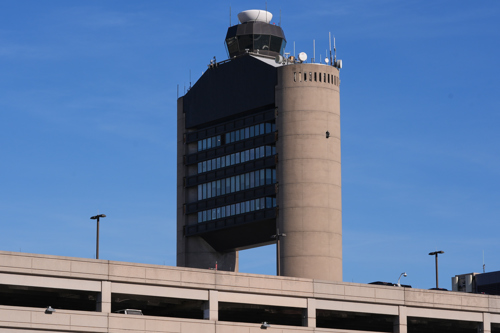 Aware of the data problem affecting numerous traffic control centers, the FAA was faced with a choice: Either focus on the affected traffic control centers or issue a nationwide halt to all departures.
The public now knows which choice the FAA made.
“I think it was more of an abundance of caution,” Morris said of the FAA decision.
Now that Transportation Secretary Sean Duffy is requesting $50 billion in emergency funding to modernize the air traffic control system, Ellis said that sounds like a serious vulnerability.
“I mean, why haven’t we updated this years ago?” she asked the retired air traffic controller.
The answer to that question, Morris replied, is to look at the priorities of Congress and past administrations.
The $50 billion request from Duffy is not an unusual request – he was already seeking $30 billion from Congress to upgrade everything from 1960s radar systems to aging and decaying control towers.
Congress appropriated $12.5 billion in 2025 for those upgrades, The Hill reported.