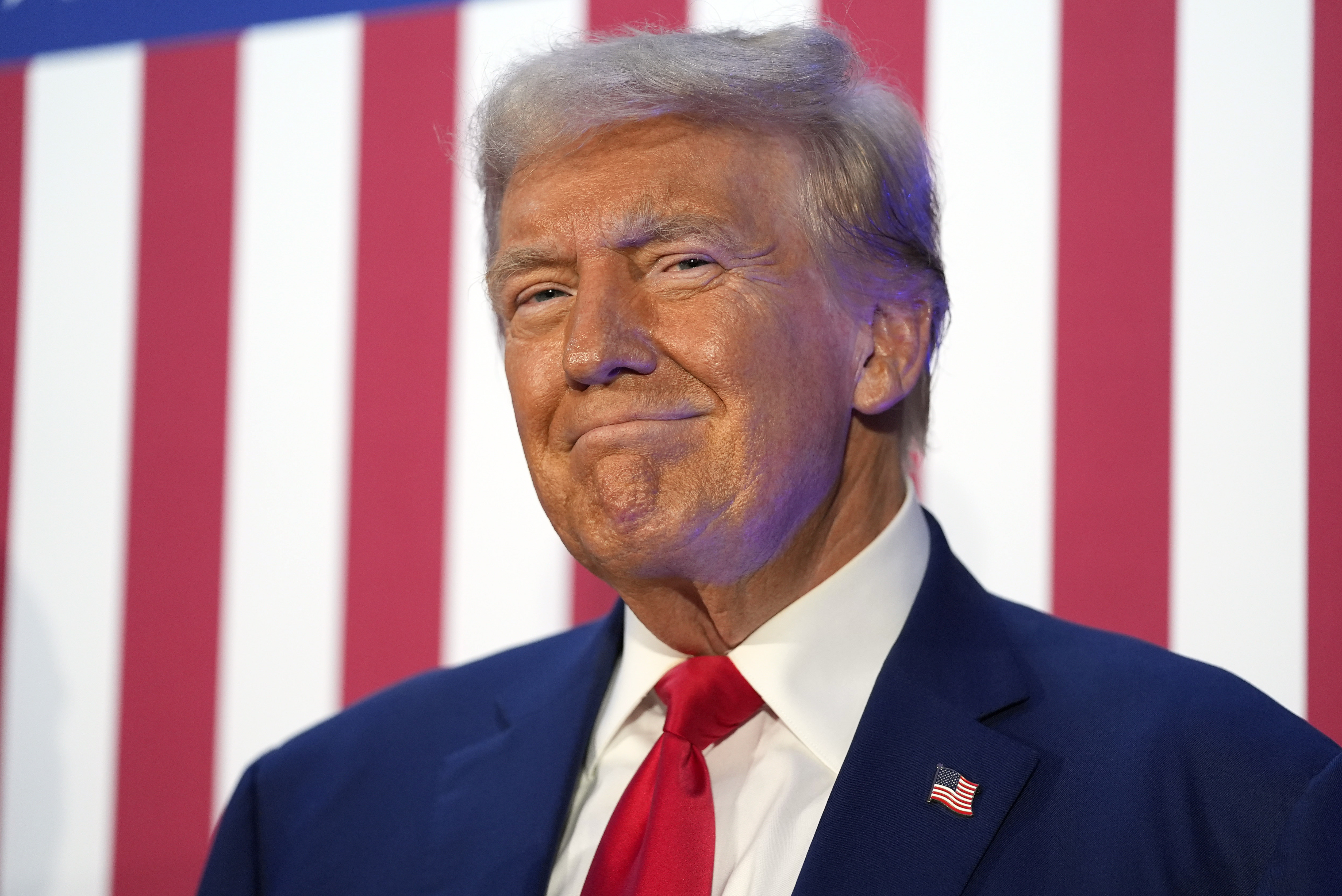


Trump announced ahead of the meeting that board members have pledged $5 billion for reconstruction, a fraction of the estimated $70 billion needed to rebuild the Hamas terrorist territory decimated after two years of war. Members are expected to unveil commitments of thousands of personnel to international stabilization and police forces for the territory.
“We have the greatest leaders in the world joining the Board of Peace,” Trump told reporters earlier this week. “I think it has the chance to be the most consequential board ever assembled of any kind."
The board was initiated as part of Trump's 20-point peace plan to end the conflict in Gaza. But since the October ceasefire, Trump's vision for the board has morphed and he wants it to have an even more ambitious remit — one that will not only complete the Herculean task of bringing lasting peace between Israel and Hamas terrorists but will also help resolve conflicts around the globe.
But ahead of the board's first gathering, the Gaza ceasefire deal remains fragile and Trump's expanded vision for it has triggered fears the U.S. president is looking to create a rival to the United Nations. Trump earlier this week said he hoped the board would push the U.N. to “get on the ball.”
“The United Nations has great potential,” he said. “They haven’t lived up to the potential.”
Some US allies remain skeptical
More than 40 countries and the European Union have confirmed they will send officials to Thursday’s meeting, according to a senior administration official who was not authorized to comment publicly. Germany, Italy, Norway and Switzerland are among more than a dozen countries that have not joined the board but are expected to attend as observers, the official said.
The U.N. Security Council held a high-level meeting Wednesday on the ceasefire deal and Israel’s efforts to expand control in the West Bank. The U.N. session in New York was originally scheduled for Thursday but was moved up after Trump announced the board's meeting for the same date and it became clear that it would complicate travel plans for diplomats planning to attend both.
Vatican Secretary of State Cardinal Pietro Parolin told reporters earlier this week that “at the international level it should above all be the U.N. that manages these crisis situations.” The Trump administration on Wednesday pushed back on the Vatican's concerns.
“This president has a very bold and ambitious plan and vision to rebuild and reconstruct Gaza, which is well underway because of the Board of Peace,” White House press secretary Karoline Leavitt said. “This is a legitimate organization where there are tens of member countries from around the world.”
Mike Waltz, the U.S. ambassador to the U.N., also pushed back on skeptical allies, saying the board is “not talking, it is doing.”
“We are hearing the chattering class criticizing the structure of the board, that it’s unconventional, that it’s unprecedented,” Waltz said. “Again, the old ways were not working.”
Questions about disarming Hamas
Central to Thursday's discussions will be creating an armed international stabilization force to keep security and ensure the disarming of the militant Hamas terrorist group, a key demand of Israel and a cornerstone of the ceasefire deal.
On Thursday, updates are expected from the Gaza Executive Board, the operational arm of the board, about its efforts to create a functioning government system and services for the territory, according to the official who spoke on condition of anonymity to preview the broad outlines of the meeting.
In addition to Trump, the official said other speakers at the conference would include Secretary of State Marco Rubio, Trump’s special envoy Steve Witkoff, Trump's son-in-law Jared Kushner, former British Prime Minister Tony Blair, the executive board’s high representative Nickolay Mladenov, and Waltz.